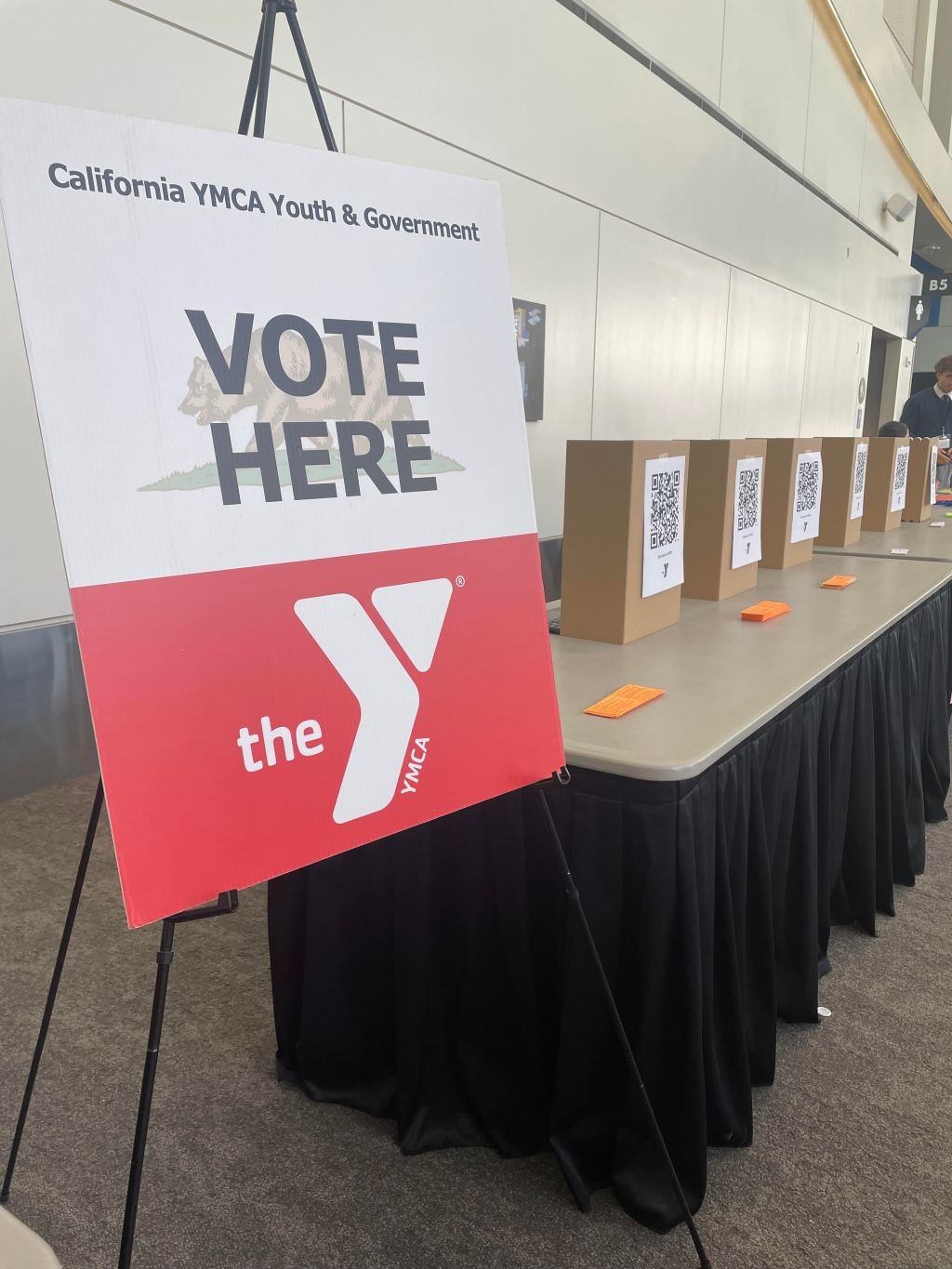
Delegates discuss the effectiveness and importance of voting and its alternatives.
Ajhar Ellis
Media Journalist
Voting is often revered as the cornerstone of our democracy. We take pride in this process, essential to our democratic government. It allows us to “make our voice heard” and maintain our power as a people. But is this really true? California voter turnout dropped in the 2024 general election by 9% from 2020 according to the California Secretary of State office. The Civics Center, an organization dedicated to supporting youth voters, shows how national youth voter registration fluctuates over time, with less than 40% of eligible 18-19 year olds registered to vote today. There’s a feeling of apathy among many voters, especially those who aren’t in key battleground states. What role does Youth & Government have in affecting how young people vote and engage with their democracy?
Despite the low state and national voter turnout, Youth & Government has still been able to instill the importance of voting through its statewide elections. At Bob last November, the Secretary of State’s office was able to achieve 100% voter turnout. Despite the apathy or lack of enthusiasm some delegates felt, the community encouraged people to vote, and an accurate representation of the people’s voice was heard. These elections get delegates into the practice of voting. The process of educating yourself on candidates, listening to their speeches, and discussing your thoughts with peers prepares delegates for doing these things in the official elections.
Youth & Government gives its delegates more than practice at voting. It gives them a feeling. Violet Chin, a Youth Governor candidate from the South Pasadena and San Marino delegation said, “I didn’t feel as empowered to vote as I do after this program.” Delegates understand that their votes have an impact in Youth & Government. Whether or not this enthusiasm will continue into local, state, and presidential elections is still to be seen.
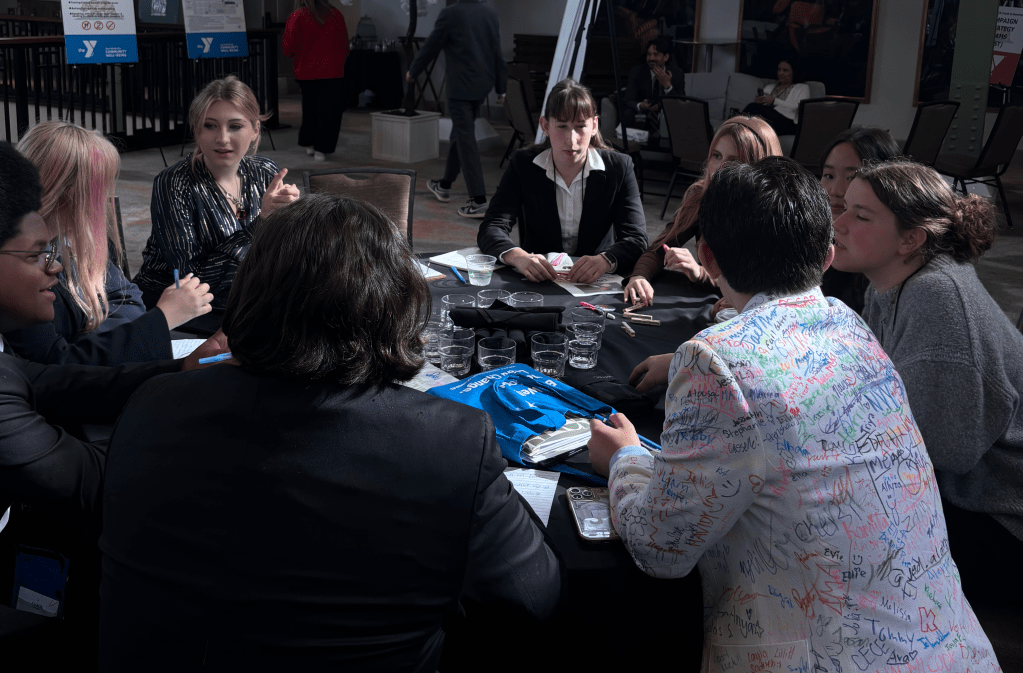
Delegates hold a wide variety of opinions on the ability of voting in official elections to create political and social progress.
“Voting is the most feasible way to make change,” said Nella Shear, a delegate from Berkeley. Voting offers a direct way to influence our government. We get to choose our politicians and vote on state-wide propositions and city-wide measures. These parts of our government play a role in supporting our daily lives and can be small steps in the direction of progress. “[Voting is] definitely not the most effective,” Nella went on to say. Casting your ballot only creates opportunities for change from within the current government system, which can limit its opportunity for drastic societal change.
Briana Alagba, former Youth Secretary of State from the Gardena Carson Delegation, has plenty of experience with the voting process. “It’s the work that you do leading up to your vote that’s really going to make a larger scale effect,” she said. Posting to social media, talking to your friends, and protesting are all activities she suggests when it comes to making a political impact in society. Reaching out to the community in this way helps everyone get on the same page, which is the first step to building political power.
Nathaniel Atanaw, a Culver Palms YMCA delegate, thinks that political organizing is the best way to make change. Uniting in groups and demanding change has historically been a powerful tool for progress. From the Civil Rights movement, to the end of Apartheid in South Africa, to the fall of Pinochet’s dictatorship in Chile, large-scale armed and non-violent movements have been effective at creating reform in society. But it comes at a cost. “We exile people who do that,” Nathaniel said. Political leaders and activists are often persecuted, arrested, exiled, or even killed due to the danger they represent to the state and status quo.
So where does Youth & Government fit in all of this?
The program does a lot to support future voters. The process of voting for statewide Youth Candidates helps delegates prepare for voting in elections once they get old enough. The YMCA website claims that former delegates are 30% more likely to vote once they turn 18. While this statistic doesn’t have an explanation behind it, it is still safe to assume that Youth & Government does empower some youth voters.
However, there is still a gap to be bridged between voting in the program and voting in official elections. At Sac, you might find the occasional pre-register to vote poster with a QR code, but there’s no real communication on the registration process or encouragement for delegates to pre-register to vote. Getting delegates pre-registered will have wide-reaching effects. 75% of young voters who are pre-registered end up voting once they turn 18, according to the Civics Center. If we truly believe that, “every voice matters,” and voting is an important way to express our opinion, this needs to become a priority within delegations and at conferences.
Voting is only one part of the equation. While Youth & Government makes an effort to prepare its delegates for voting, other parts of creating political change are largely neglected. If this program is truly about creating a better political future, a more holistic approach to civic engagement needs to be explored. Educating delegates on current political events and getting delegates involved in their local political organizations are both things that can be emphasized at a wider scale throughout conferences and delegation meetings. For now, it’s up to the delegates to take what they’ve learned and use it. To educate, to organize, and to build a better future.


 The Daily Delegate
Leave a comment